This article is organized around occupations and job duties—farmers, applicators, grounds crews, and others—that historically handled Paraquat, helping readers connect their work history with potential exposure.
**Which occupations faced the most Paraquat exposure?** Farmworkers, licensed applicators, crop dusters, landscapers, and others worked directly with or near the chemical. This page breaks down **exposure by job type**—who handled mixing and spraying, who re-entered treated fields, and who may have had significant cumulative contact. If your job history overlaps with these roles and you have a Parkinson's diagnosis, a case review may be worth exploring. For the broader story of Paraquat on U.S. farms and why litigation grew, see how Paraquat was used on U.S. farms.
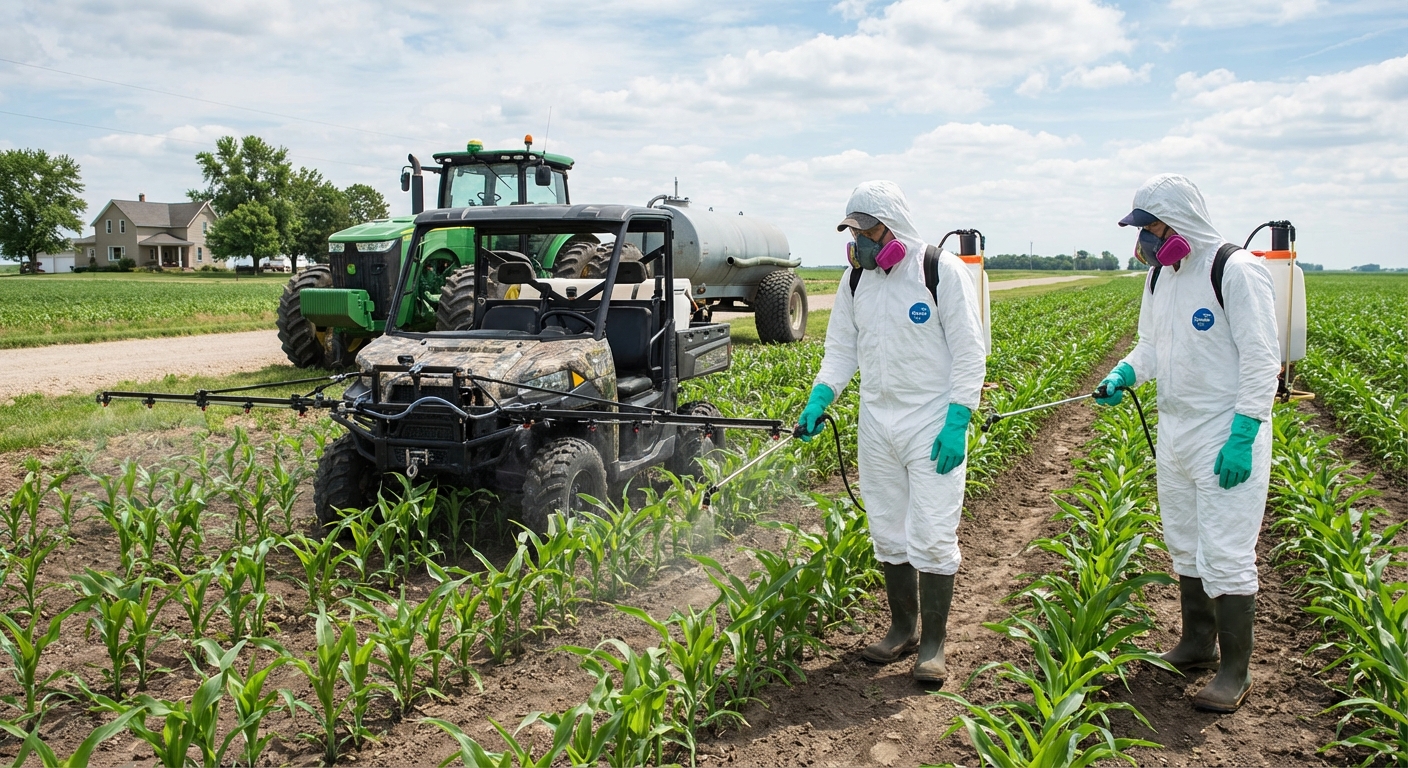
Agricultural workers applying herbicide in farm fields
What Is Paraquat?
Paraquat dichloride is a highly toxic herbicide that has been used in American agriculture since the 1960s. The chemical works by destroying plant cells and can kill most green plants on contact. Manufacturers sold Paraquat under brand names including Gramoxone, Firestorm, and Parazone.
The Environmental Protection Agency (EPA) classified Paraquat as a "restricted use pesticide" in 1988. This meant only licensed applicators could purchase and use the chemical. Despite this restriction, Paraquat remained widely available to agricultural professionals for many years.
Paraquat was particularly popular because it was effective, fast-acting, and relatively inexpensive. Farmers used it to clear fields before planting, control weeds between crop rows, and prepare fields for harvest. The chemical was especially common in row crop agriculture, including corn, soybeans, cotton, and wheat production.
Research has now linked Paraquat exposure to Parkinson's disease, a progressive neurological disorder. Multiple studies suggest that people exposed to Paraquat face significantly higher risks of developing Parkinson's disease compared to those without exposure. This connection has led to thousands of lawsuits against Paraquat manufacturers.
How Exposure Occurred
Paraquat exposure happened in several ways depending on the job and work activities. Understanding these exposure pathways helps explain why certain occupations faced higher risks.
If you've been affected, a free case review can help you understand your options.
No obligation. A quick review can clarify your next steps.
Request a free case reviewDirect Application: Workers who mixed, loaded, or applied Paraquat faced the highest exposure levels. Even with protective equipment, exposure could occur through splashing during mixing, drift during spraying, contact with contaminated surfaces, or leaks from application equipment.
Re-entry into Treated Fields: Workers who entered fields shortly after Paraquat application faced exposure risks. The chemical could remain on plant surfaces, soil, and dust particles. Workers harvesting crops, performing maintenance, or conducting other field activities could inhale or come into contact with residual Paraquat.
Equipment Contamination: Spray equipment, mixing containers, and storage areas could become contaminated with Paraquat. Workers handling this equipment without proper protection faced ongoing exposure risks. Contaminated clothing and equipment could also expose family members if brought home.
Environmental Drift: Paraquat applications could drift beyond target areas, potentially exposing workers in adjacent fields, nearby residents, and wildlife. Wind conditions, application methods, and equipment calibration all influenced drift patterns.
Accidental Spills and Leaks: Equipment failures, transportation accidents, and storage issues could lead to spills that exposed workers to concentrated Paraquat. These incidents often resulted in higher levels of exposure than routine application activities.
The cumulative nature of exposure is particularly important. Many workers used Paraquat repeatedly over years or decades. Each application added to their total exposure burden, potentially increasing their risk of developing health problems later in life.
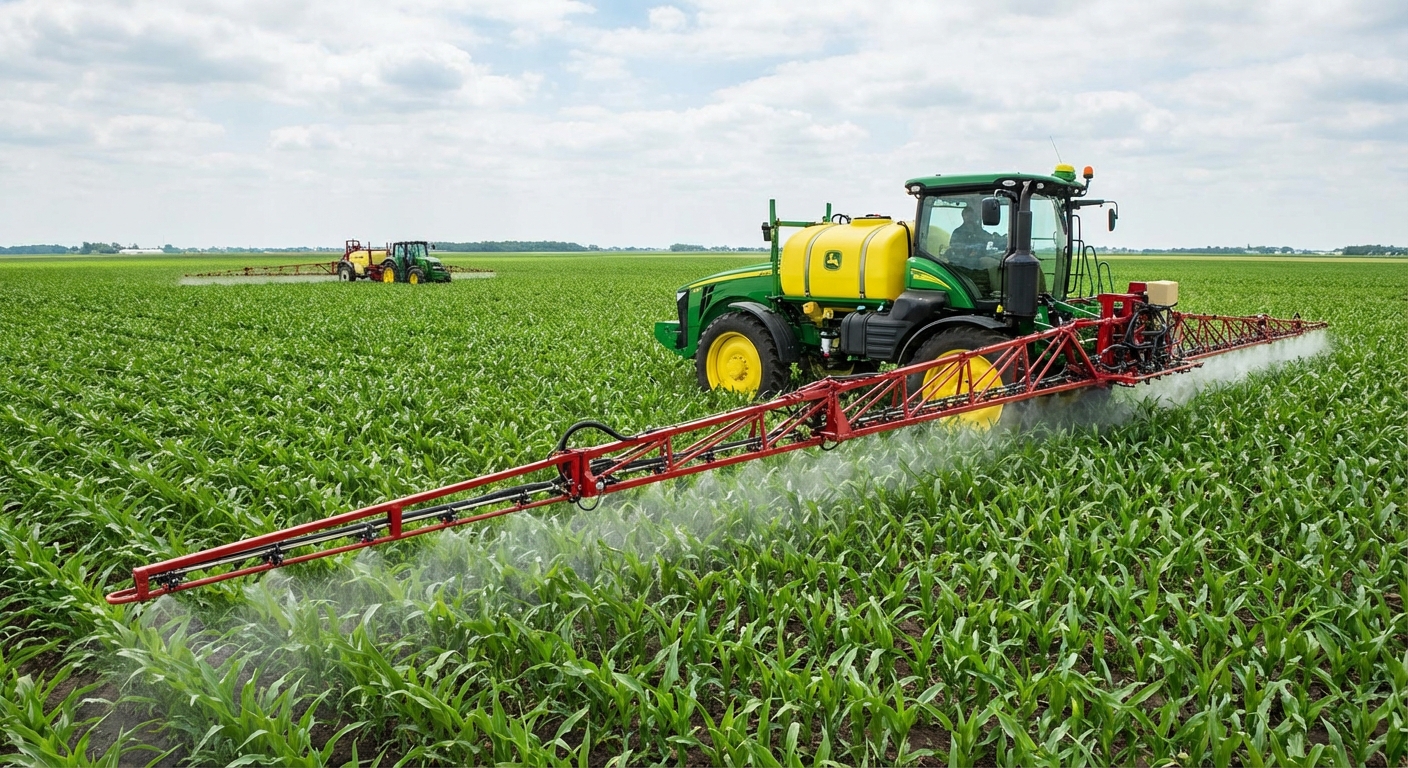
Farm equipment and sprayers used for herbicide application
Who May Be Affected
Several occupational groups faced significant Paraquat exposure risks. While agricultural workers had the highest exposure levels, other professions also worked with or around the chemical.
Don't wait—statutes of limitations may apply. Get a confidential evaluation.
Get a free case review and learn whether you may qualify.
See if you qualifyFarm Workers and Farmhands: Agricultural workers who directly applied Paraquat or worked in treated fields faced the highest exposure levels. This includes workers who mixed the chemical, operated spray equipment, and handled treated crops. Many of these workers had minimal protective equipment, especially in earlier decades when safety standards were less strict.
Licensed Pesticide Applicators: Commercial applicators who applied Paraquat for multiple farms accumulated significant exposure over their careers. These professionals often applied the chemical more frequently than individual farmers, potentially increasing their risk. They typically held state-issued pesticide applicator licenses and worked for agricultural service companies.
Farm Owners and Operators: Farmers who applied Paraquat themselves, particularly those who did so for many years, faced elevated risks. Family members who helped with farm operations may also have been exposed. Many small and medium-sized farm operations relied on Paraquat for weed control.
Agricultural Support Workers: Workers who maintained equipment, transported chemicals, or worked in storage facilities could be exposed even if they didn't directly apply Paraquat. Contamination on equipment and in work areas created exposure risks. This includes mechanics, truck drivers, and warehouse workers.
Rural Residents: People living near farms where Paraquat was regularly used may have experienced lower-level exposure through drift, contaminated water sources, or contact with treated areas. While exposure levels were typically lower than for direct applicators, long-term residents could still accumulate significant exposure.
Landscapers and Groundskeepers: Professionals who used Paraquat for vegetation control on non-agricultural properties also faced exposure risks. These workers may have used the chemical less frequently than agricultural workers but still accumulated exposure over time. Golf courses, parks, and commercial properties sometimes used Paraquat for weed control.
Research suggests that the risk of developing Parkinson's disease increases with both the duration and intensity of Paraquat exposure. Workers who used the chemical for many years or in high volumes may face the greatest risks. However, even workers with moderate exposure levels may be affected.
Jobs With Highest Paraquat Exposure Risks
Understanding which specific jobs had the highest Paraquat exposure helps identify who may have been affected. These occupations typically involved direct handling or frequent work in treated areas.
Experienced attorneys are ready to review your situation at no cost.
One step: request a free, confidential case evaluation.
Get your free case reviewCrop Dusters and Aerial Applicators: Pilots and ground crews who applied Paraquat by aircraft faced significant exposure risks. Aerial application could create drift and expose applicators to concentrated chemical during mixing and loading operations. These workers often applied Paraquat to large acreages, increasing their cumulative exposure.
Custom Applicators: Commercial pesticide applicators who provided spraying services to multiple farms accumulated high exposure levels. These professionals often worked throughout entire growing seasons, applying Paraquat repeatedly across different properties. They typically held commercial applicator licenses and worked for agricultural service companies.
Farm Managers and Supervisors: Agricultural managers who oversaw Paraquat applications and worked in treated fields faced elevated exposure risks. These workers often participated in application decisions and field activities, leading to both direct and indirect exposure. They may have worked with Paraquat for many years across multiple growing seasons.
Field Workers and Harvesters: Agricultural workers who entered fields shortly after Paraquat application faced exposure risks from residual chemical. Harvest workers, crop scouts, and field maintenance crews could be exposed even if they didn't directly apply the herbicide. These workers often had minimal protective equipment and worked in treated areas regularly.
Chemical Mixers and Loaders: Workers who mixed Paraquat concentrates and loaded application equipment faced some of the highest exposure levels. These activities involved handling concentrated Paraquat, increasing the risk of spills, splashes, and inhalation. Mixing operations often occurred in enclosed or semi-enclosed spaces, potentially concentrating exposure.
Irrigation Workers: Agricultural workers who maintained and operated irrigation systems in Paraquat-treated fields could be exposed to residual chemical. These workers often worked in fields shortly after herbicide applications and handled equipment that may have been contaminated. Irrigation activities could also disturb treated soil and plant material.
Agricultural Equipment Operators: Workers who operated tractors, sprayers, and other equipment used for Paraquat application faced exposure risks. Equipment operators could be exposed through equipment contamination, drift during application, and work in treated fields. These workers often had long careers in agriculture, accumulating years of potential exposure.
Farm Supply Store Employees: Workers at agricultural supply stores who handled Paraquat products could face exposure risks, though typically at lower levels than direct applicators. These workers handled containers, processed sales, and may have been involved in product transfers. Exposure risks increased with handling frequency and duration.
If you worked in any of these occupations and have been diagnosed with Parkinson's disease, you may qualify for a free case review. Learn more about Paraquat lawsuit information and your potential rights.
Take the first step: a free consultation could clarify your legal options.
Free, no-obligation case review. Find out if you qualify.
Start with a free consultation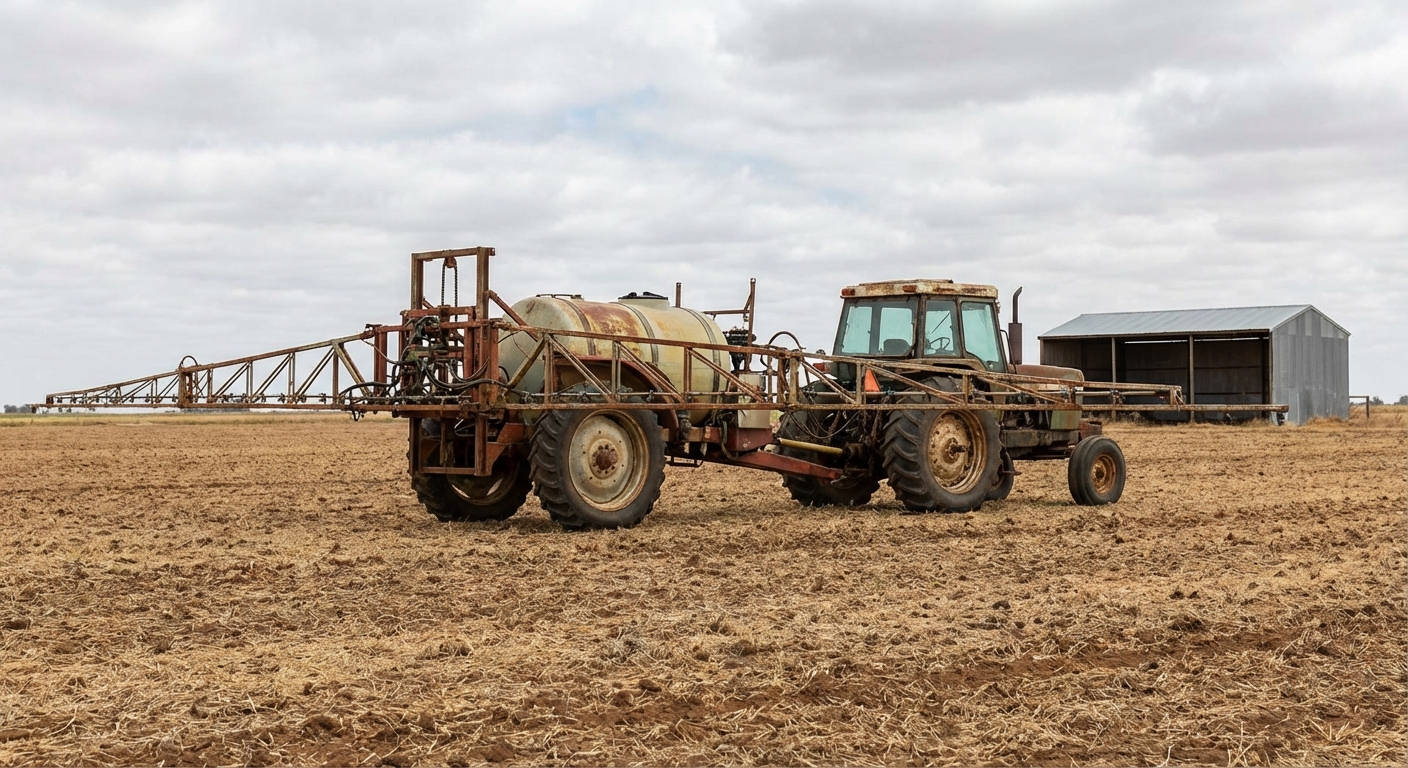
Agricultural equipment and storage facilities where Paraquat was commonly used
Current Status of Litigation
Thousands of Paraquat lawsuits are currently pending in courts across the United States. These cases allege that manufacturers knew about the link between Paraquat and Parkinson's disease but failed to adequately warn users about these risks.
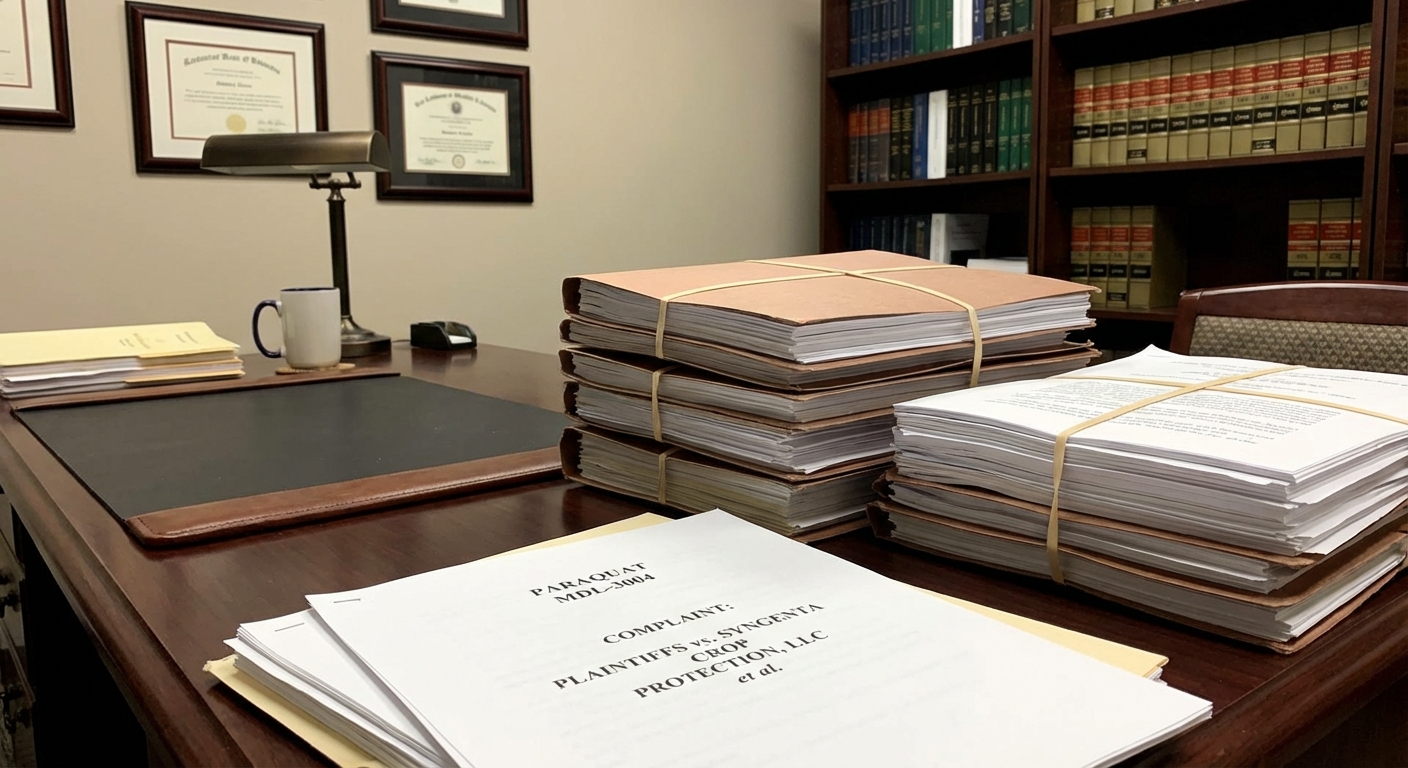
Multidistrict Litigation (MDL): In June 2021, the Judicial Panel on Multidistrict Litigation consolidated federal Paraquat cases into MDL No. 3004. This consolidation streamlines pretrial proceedings by allowing one federal judge to oversee discovery and coordinate bellwether trials. The MDL is proceeding in the Southern District of Illinois under Judge Nancy J. Rosenstengel.
Bellwether Trials: The MDL process includes bellwether trials, which are test cases selected to help both sides understand how juries might view the evidence. These trials don't determine outcomes for all cases, but they provide valuable information that often influences settlement negotiations. Several bellwether trials have been scheduled, with outcomes helping to establish frameworks for evaluating other cases.
State Court Cases: In addition to the federal MDL, numerous Paraquat cases are proceeding in state courts. These cases may proceed independently or be coordinated with the MDL proceedings depending on state laws and court procedures.
Scientific Evidence: The litigation is supported by growing scientific evidence linking Paraquat to Parkinson's disease. Multiple peer-reviewed studies have found that people exposed to Paraquat face significantly higher risks of developing Parkinson's disease. Some research suggests the risk may be 2.5 times higher for exposed individuals compared to those without exposure.
Manufacturer Knowledge: Court documents and internal company records revealed during litigation suggest that manufacturers may have been aware of neurological risks associated with Paraquat for decades. These documents allegedly show that companies knew about research linking Paraquat to Parkinson's disease but failed to provide adequate warnings to users.
Settlement Discussions: As bellwether trials proceed and evidence develops, settlement discussions may occur. However, no global settlement has been announced as of early 2025. Individual cases may be resolved through settlements, while others may proceed to trial.
Top Tier Legal connects you with experienced mass tort attorneys.
Confidential evaluation at no cost. See if you have options.
Get a free case evaluationThe litigation remains active and evolving. New cases continue to be filed as more people are diagnosed with Parkinson's disease and learn about the potential connection to their Paraquat exposure history. For more detailed information about the scientific evidence, see our article on Paraquat exposure and Parkinson's disease.
What a Case Review Involves
A case review is an initial evaluation to determine whether you may have a valid legal claim related to Paraquat exposure and Parkinson's disease. This process is confidential, free, and does not create any obligation on your part.
Initial Consultation: The process typically begins with a conversation about your work history and medical diagnosis. You'll be asked about when and how you were exposed to Paraquat, what jobs you held that involved Paraquat use, how long you worked with or around the chemical, and when you received your Parkinson's disease diagnosis.
Work History Documentation: Information about your employment history helps establish your exposure. This might include employment records, job descriptions, pesticide applicator licenses, purchase receipts, or testimony from coworkers who can verify your Paraquat exposure history. Documentation showing you worked in occupations that commonly used Paraquat strengthens your case.
Medical Records Review: If you decide to proceed, medical records related to your Parkinson's diagnosis and treatment may be reviewed. This helps establish the connection between your exposure and your condition. You may also be asked about your symptoms, when they began, and how they've progressed over time.
Exposure Assessment: Information about your Paraquat exposure helps build your case. This includes details about which jobs involved Paraquat use, how frequently you worked with the chemical, what protective equipment you used, and whether you experienced any direct exposure incidents such as spills or accidents.
Eligibility Assessment: Based on the information gathered, an assessment will be made about whether you may qualify to pursue a claim. Factors considered include the duration and intensity of your exposure, the timing of your diagnosis relative to your exposure, and how your case fits within the broader litigation.
Next Steps: If you may qualify, you'll be informed about the next steps in the legal process. This might include connecting you with an independent law firm that handles Paraquat cases. If you don't qualify, you'll receive an explanation of why.
Free, no-obligation case review. Find out if you qualify.
No obligation. A quick review can clarify your next steps.
Check your eligibilityNo Upfront Costs: Case reviews are conducted at no cost to you. If you qualify and choose to proceed with a case, most attorneys work on a contingency fee basis, meaning they only receive payment if your case is successful. To understand more about how mass tort cases work, you may find our guide on <a href="/blog/understanding-mass-tort-litigation/">understanding mass tort litigation</a> helpful.
The case review process is designed to be straightforward and respectful of your situation. The goal is to help you understand your options and determine whether pursuing legal action makes sense for your circumstances. If you're ready to begin, you can contact us for a free case review.
Important Disclaimers
Understanding the legal landscape surrounding Paraquat litigation requires recognizing several important points about the process and potential outcomes.
No Guarantees: Legal cases involve uncertainty. Past results in similar cases don't guarantee future outcomes. Each case is evaluated individually based on its unique facts and circumstances. The strength of your case depends on many factors, including the evidence available, the timing of your diagnosis, and how courts interpret the scientific evidence.
Time Limits Apply: Statutes of limitations set deadlines for filing lawsuits. These deadlines vary by state and depend on factors such as when you discovered your injury and when you were diagnosed. Missing these deadlines can permanently bar you from pursuing compensation, so it's important to act promptly if you believe you may have a claim.
Individual Cases: Even though thousands of Paraquat cases are proceeding, each case is handled individually. Your specific circumstances, medical history, and exposure details will be considered separately. Compensation, if any, will be based on your individual situation rather than a formula applied to all cases.
Scientific Evidence: While research suggests a link between Paraquat and Parkinson's disease, scientific evidence continues to evolve. Courts will evaluate this evidence, and outcomes may depend on how juries and judges interpret the available research.
Litigation Timeline: Mass tort litigation typically takes several years to resolve. Cases may proceed through discovery, bellwether trials, and potentially individual trials or settlement negotiations. The timeline for your specific case depends on many factors beyond your control.
If you've been affected, a free case review can help you understand your options.
Get a free case review and learn whether you may qualify.
Request a free case reviewIf you worked in a job that commonly involved Paraquat use and have been diagnosed with Parkinson's disease, the most important step is to have your situation evaluated. A case review can help you understand your options and determine whether pursuing legal action makes sense for your circumstances.
See if you qualify for a free case review to learn more about your potential rights and options related to Paraquat exposure and Parkinson's disease.
Top Tier Legal, LLC is not a law firm and does not provide legal advice. This content is for informational purposes only. Submitting information does not create an attorney-client relationship. If you qualify, Top Tier Legal, LLC may connect you with an independent law firm. Past results do not guarantee future outcomes.